






At first, I didn’t think there was anything wrong with me.
Spending three or four hours a day on my phone was just a “way of relaxing” for me. When I was tired from work, I’d scroll through short videos, check social media while waiting for messages, and even when I had nothing to do, my phone almost automatically unlocked.
But one day, I suddenly realized a terrifying detail: I hadn’t been able to focus on one thing for more than 30 minutes in a long time.
It wasn’t that I didn’t have time, but that my attention was being constantly fragmented.
I thought I was relaxing, but I was actually being “trained”
At first, I thought scrolling on my phone was just entertainment, but later I discovered that this “entertainment” had a rhythm.
The moment you open a short video, you never know what’s next. Funny, informative, emotional, plot twists—each one might be a little more exciting than the last.
The problem is here—this mechanism of “the next one might be better” makes me keep scrolling.
I’ve even had some absurd experiences: I know mentally, “That’s enough, I should stop,” but my fingers still keep scrolling. It’s not a deliberate choice, but more like a conditioned reflex.
Later, I slowly realized that this wasn’t a matter of willpower, but rather that my brain had been trained to operate on an “instant feedback-driven” model.
I tried many methods, but almost all failed
After realizing the problem, I tried many things.
I used the system’s built-in screen time limit and installed so-called “focus apps.” They worked at first, but quickly became ineffective.
When the screen time popped up, I could always find a reason to click “Extend for another 15 minutes”; the same went for app blocking tools. Sometimes, if I needed to use a certain social media app, I would simply turn off the limit; and when I was emotionally agitated, I would even uninstall those blocking tools.
Ultimately, these methods all have one thing in common: they all rely on “my self-control in a rational state.”
But the reality is that most of the urge to scroll through my phone doesn’t occur in a rational state.
My first encounter with Brick was when I was already feeling a bit “out of control”
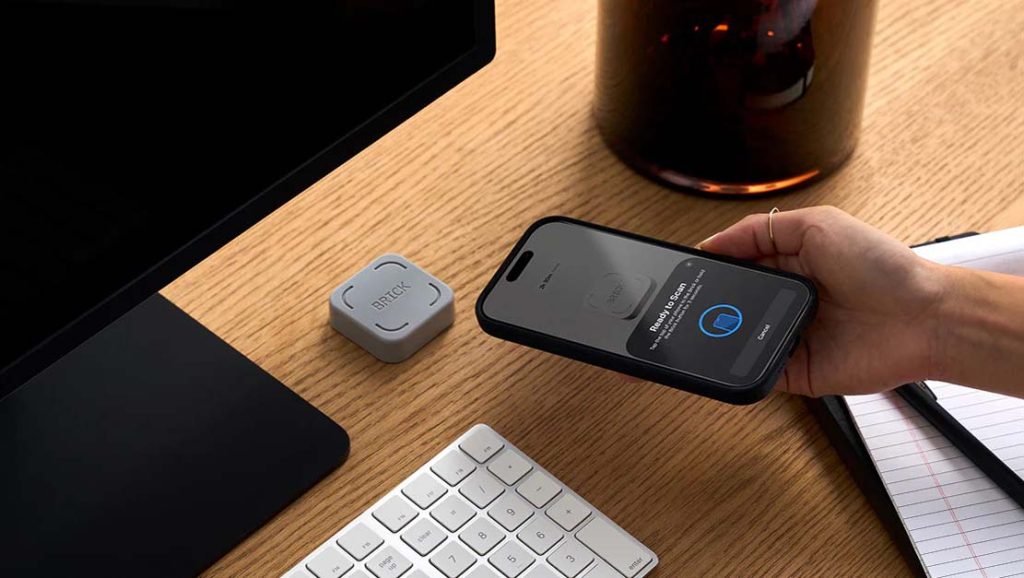
When I first saw Brick, I was actually skeptical.
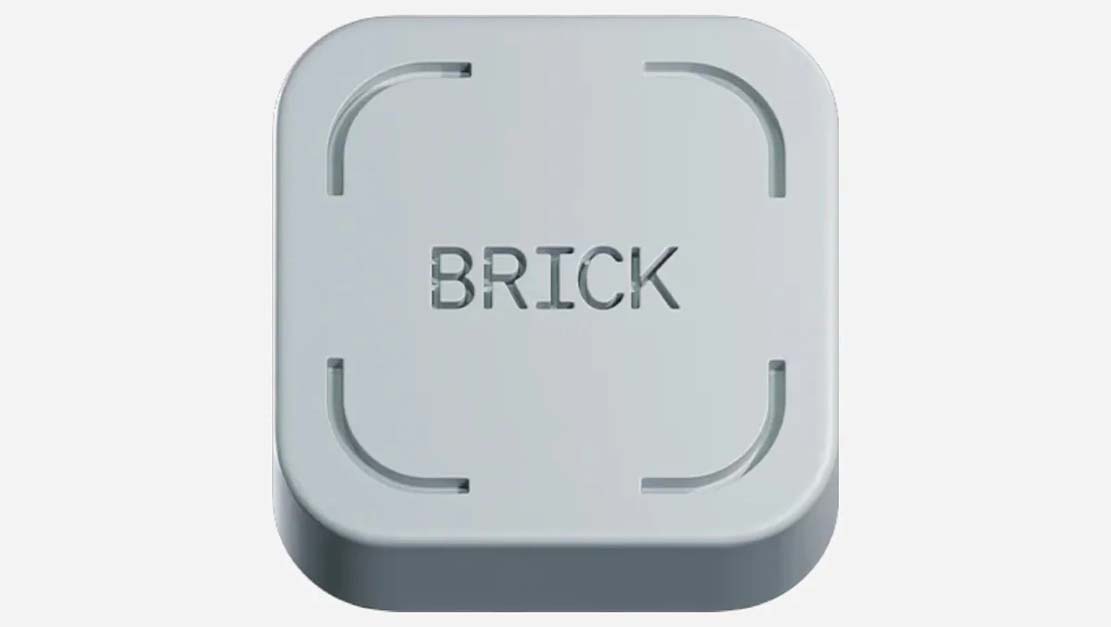
It’s not an app, not a notification tool, and not a statistics tool; it’s a physical hardware device.
Its logic is simple: to unlock your phone and use certain apps, you must first use the physical device, Brick.
At first, I thought it was just “an extra step,” but later I realized this step was crucial.
That “extra step” changed the way I use my phone
I made a very clear comparison.
Before, when I picked up my phone, it was basically unconscious: unlock → open the app → start browsing. The whole process was almost uninterrupted.
But after using Brick, there was an extra physical step: I had to get the Brick first, then unlock my phone.
This seemingly small action made the whole process “unsmooth.”
And this “unsmoothness” became the key.
Because when the impulse is interrupted, I pause for a few seconds. In those few seconds, I often suddenly realize: Do I really need to scroll now?
Most of the time, the answer is no.
I’ve started to realize: it’s not that I can’t control it, but that I previously had no “choice”
My previous screen-scrolling behavior was too fast, so fast that I didn’t even have time to think.
But Brick didn’t change the phone’s functionality; it changed my behavioral path.
It changed my approach from “directly entering a scrolling state” to “having to do something first.”
This action seems simple, but it transforms “unconscious” into “conscious.”
And once in a conscious state, many impulses naturally subside.
More importantly, it didn’t deprive me of my freedom to use my phone
I don’t need to completely quit social media, nor do I need to forcibly disconnect from the digital world.
What Brick does is more like: every time I want to use my phone, it makes me reconsider.
Using or not using is no longer automatic; it’s a choice I make.
This is actually very important to me because I don’t want to “escape my phone”; I just want to stop being led by it.
Later I realized: the problem wasn’t the phone, but “boundaryless use”
Looking back, my problem wasn’t having too many phones, but the lack of boundaries between me and them.
It could be turned on anytime, at no cost, and without interruption.
What Brick did was make this “zero-cost entry point” have a barrier to entry.
This barrier isn’t a barrier, but a reminder: what you’re doing now is a choice, not a habitual reflex.
I no longer try to quit using my phone, but relearn how to use it
Now, I still use my phone to browse social media and watch short videos.
But the difference is, I’m no longer someone who “automatically enters a state” of using my phone.
Before using my phone each time, I have to go through a small pause.
And it’s this pause that allows me to regain a little control over my time and attention.
For me, Brick didn’t keep me away from my phone, but made me a user of my phone again, not someone being used.



+ There are no comments
Add yours