







As the digital age continues to advance, businesses, developers, and individuals are increasingly relying on websites and online applications to drive business growth. Honestly, choosing the right hosting method is crucial to a website’s performance, and this decision can directly impact the site’s speed, stability, and scalability. Cloud hosting and traditional hosting are the two most common options, each with its own strengths and weaknesses, and they cater to different types of websites.
For many, cloud hosting seems to represent greater flexibility and a more futuristic appeal, but traditional hosting has its own unique charm, especially in certain environments where it might be more suitable. Both hosting methods come with distinct advantages and limitations, and the choice between them isn’t just a matter of technical factors—it’s about aligning with your website’s actual needs, budget, and future growth trajectory.
In the following analysis, I’ll delve into the characteristics of these two hosting options, hoping to help you make a more informed decision based on your own requirements.
What is Cloud Hosting?
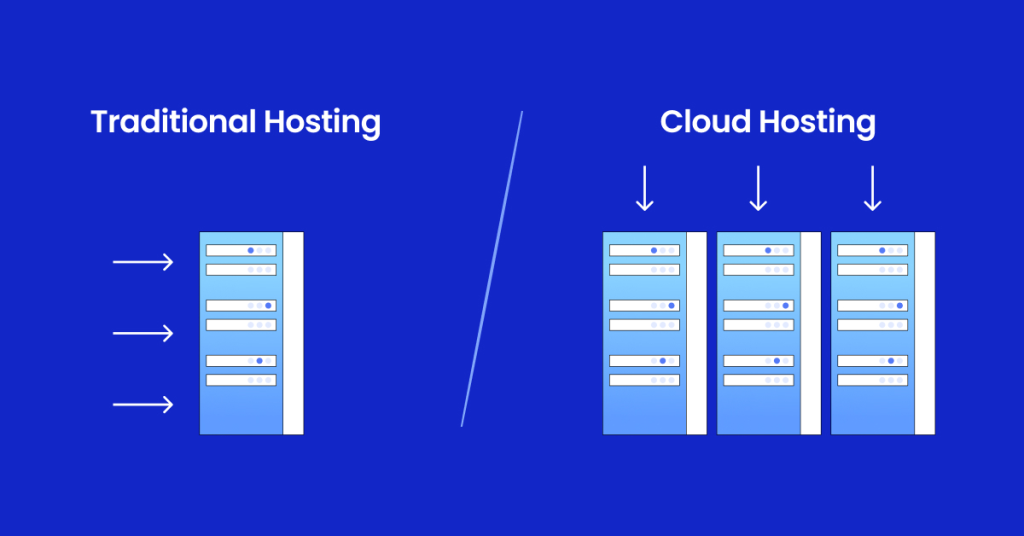
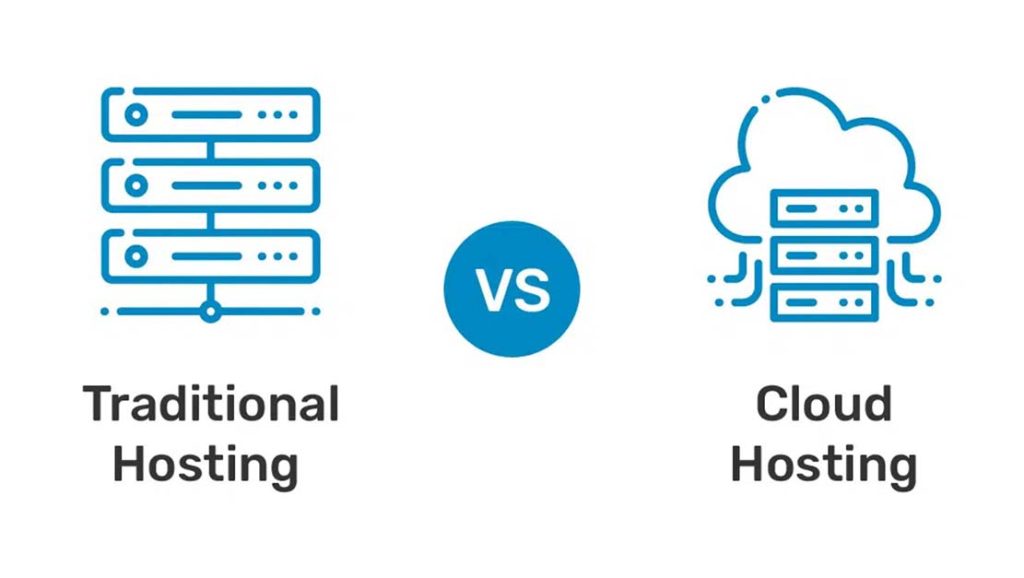
Cloud hosting is a hosting method based on cloud computing technology. It utilizes multiple servers that form a virtual resource pool to host websites and applications. Unlike traditional hosting, which relies on a single physical server, cloud hosting ensures greater flexibility and reliability by distributing resources across multiple servers.
Key Features of Cloud Hosting:
- Elastic Scaling: Cloud hosting allows resources to be automatically adjusted according to traffic demands, ensuring that websites always respond quickly and maintain stability. This elasticity makes cloud hosting particularly well-suited for high-traffic websites.
- High Availability: Cloud hosting uses a distributed architecture that typically consists of multiple data centers and servers. Even if one node encounters a failure, the website can continue running using other servers.
- Pay-as-you-go: Cloud hosting generally operates on a pay-as-you-go model, where users only pay for the resources they actually use. This flexibility is particularly beneficial for small and medium-sized businesses with limited budgets.
- Automation and Simplified Management: Many cloud hosting services provide automation tools like automatic backups, self-healing, and monitoring tools, making it easier for users to manage the hosting environment.
What is Traditional Hosting?
Traditional hosting typically refers to hosting methods based on physical servers, including shared hosting, virtual private server (VPS) hosting, and dedicated server hosting. Traditional hosting places websites on a single physical server, where users often need to manually configure and manage server resources.
Key Features of Traditional Hosting:
- Fixed Resources: Traditional hosting typically offers fixed computing resources, including bandwidth, storage, and processing power. Resources are static, and users need to purchase hardware in advance and adjust it based on demand.
- Independent Management: For dedicated server or VPS hosting, users are usually responsible for more management tasks, including operating system installation, application configuration, and security settings.
- Relatively Low Cost: Compared to cloud hosting, traditional hosting, especially shared hosting, generally has a lower initial cost but comes with compromises in performance and security.
Advantages of Cloud Hosting
1. Flexible Resource Scaling
One of the most significant advantages of cloud hosting is its elastic scaling. Website traffic and resource demands are often variable, especially for eCommerce sites, news websites, and content platforms. If traditional hosting is used, the website may face the risk of server overload during high traffic periods. Cloud hosting, however, can automatically scale resources in real-time, ensuring that websites always perform optimally, even during traffic spikes.
Cloud hosting automatically adjusts computing power and storage capacity based on demand, preventing over-provisioning or resource shortages. This flexibility allows businesses to quickly adjust their resource allocation based on varying needs.
2. High Availability and Fault Tolerance
Another major advantage of cloud hosting is its high availability and fault tolerance. Traditional hosting often uses a single physical server, meaning that if the server experiences hardware failure or technical issues, the website may go down, affecting user access and website performance.
In contrast, cloud hosting distributes data and applications across multiple nodes and data centers. When one node or data center encounters an issue, traffic is automatically routed to other functioning nodes, preventing service interruptions. Cloud platforms usually guarantee 99.9% or higher uptime, ensuring continuous business operations.
3. Pay-as-you-go, Flexible Costs
Unlike traditional hosting, which typically involves a fixed fee, cloud hosting uses a pay-as-you-go model, where users only pay for the resources they actually use. This flexible billing model enables businesses to manage costs effectively by scaling resources as needed, avoiding paying for unused resources. For example, if website traffic decreases or enters an off-peak season, users can reduce resource usage and lower costs; during peak traffic, cloud hosting can automatically scale up, ensuring smooth performance.
For many small and medium-sized businesses, this pay-as-you-go model offers significant benefits because it reduces unnecessary spending and allows more precise control over budget allocation.
4. Simplified Management and Automation
Cloud hosting platforms typically offer highly automated management tools, making website management easier. These platforms provide automatic backups, disaster recovery, load balancing, and resource monitoring, ensuring that websites remain stable and data is secure without requiring manual intervention.
Cloud hosting also offers user-friendly dashboards, making it easy to monitor and manage resources. Even users without a strong technical background can easily configure and manage their websites, significantly reducing the complexity of management.
Advantages of Traditional Hosting
1. Fixed Costs and Budget Control
Traditional hosting typically uses a fixed-fee structure, where users pay a fixed amount per month or year. For some businesses, this fixed fee structure helps predict and control expenses. Especially for shared hosting and VPS hosting, initial investment is relatively low, and businesses can achieve web hosting with less cost upfront.
2. Full Control and Customization
For users who need complete control over their server configuration and environment, traditional hosting (especially dedicated server hosting) provides a high degree of customization. Users can freely choose hardware configurations, operating systems, and software environments and adjust resources according to their specific needs. This level of control is crucial for websites that require high performance, security, and customization.
For example, developers or businesses can optimize server memory, storage, and processing power based on application needs and configure firewalls and security policies to enhance website performance and security.
3. Better Performance
With dedicated server hosting, users receive exclusive access to server resources without sharing bandwidth, storage, or computing power with other users. This ensures higher performance, especially for resource-intensive applications and high-concurrency websites. For websites with extremely high performance requirements, such as large-scale database management systems or high-frequency trading platforms, traditional hosting (especially dedicated servers) provides superior performance compared to cloud hosting.
4. Security Control
With traditional hosting, especially when using a dedicated server, users have full control over security settings. This level of control is crucial for websites that require high security, such as financial platforms, eCommerce sites, and government websites. Unlike cloud hosting, which involves shared resources, dedicated servers ensure that data is not exposed to other users, offering superior data protection.
Cloud Hosting vs Traditional Hosting: Which Is Right for Your Needs?
1. Budget and Cost Control
If your business has a limited budget and stable traffic demands, traditional hosting (especially shared hosting or VPS hosting) may be a better fit. It offers lower initial costs and makes it easier to manage expenses with a fixed fee structure. On the other hand, if you want to adjust resources and costs based on fluctuating traffic, cloud hosting is a better option, as its pay-as-you-go model helps you more accurately manage expenses.
2. Traffic Fluctuations and Scaling Needs
If your website experiences significant traffic fluctuations, especially during seasonal peaks or promotions, cloud hosting’s elastic scaling feature will help you easily manage high traffic periods and ensure smooth performance. For stable, low-traffic websites, traditional hosting will likely suffice.
3. Performance and Control Needs
For those who need high performance, full control, and extensive customization, traditional hosting (especially dedicated server hosting) might be the better choice. It allows for full control over hardware, operating systems, and software configurations, ensuring optimal performance for resource-heavy or high-security websites.
4. Management Capabilities
If you lack a dedicated technical team or prefer to minimize the operational workload, cloud hosting offers automation tools and simplified management interfaces that make it easier for businesses to manage their websites. Traditional hosting, especially with VPS or dedicated servers, requires more technical knowledge and management experience.
Choose the Right Website Hosting Method for You
Cloud hosting and traditional hosting each have their distinct advantages, depending on the type of website and business needs. Cloud hosting is ideal for businesses that require flexible scaling, automation, high availability, and pay-as-you-go pricing, particularly for websites with fluctuating traffic. Traditional hosting, on the other hand, is better suited for businesses with stable traffic, a fixed budget, or specific performance and security requirements that demand greater control.
The best hosting solution for you ultimately depends on your website’s requirements, budget, and technical expertise. Understanding the pros and cons of both methods will help you make an informed decision that aligns with your business goals.




+ There are no comments
Add yours